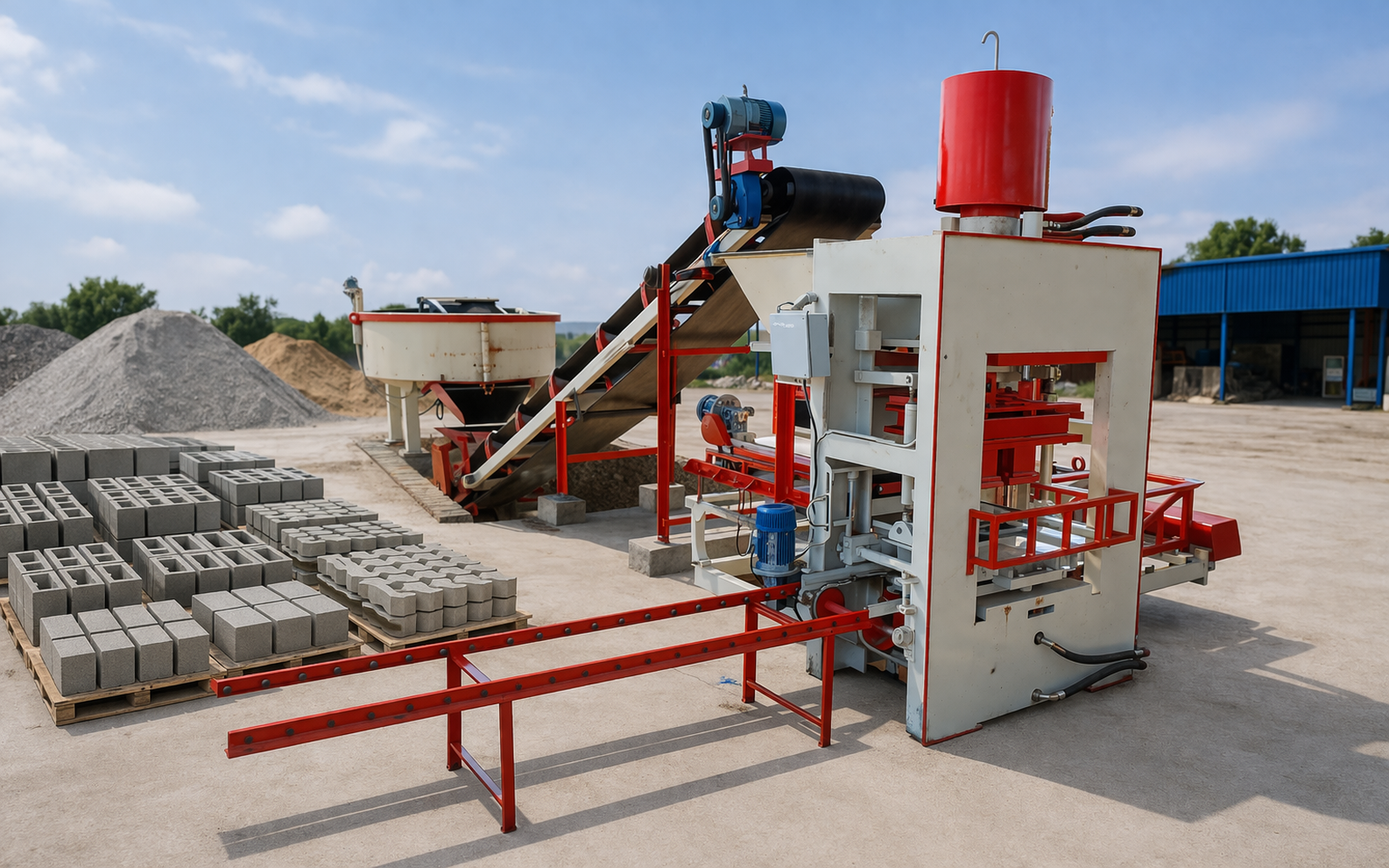
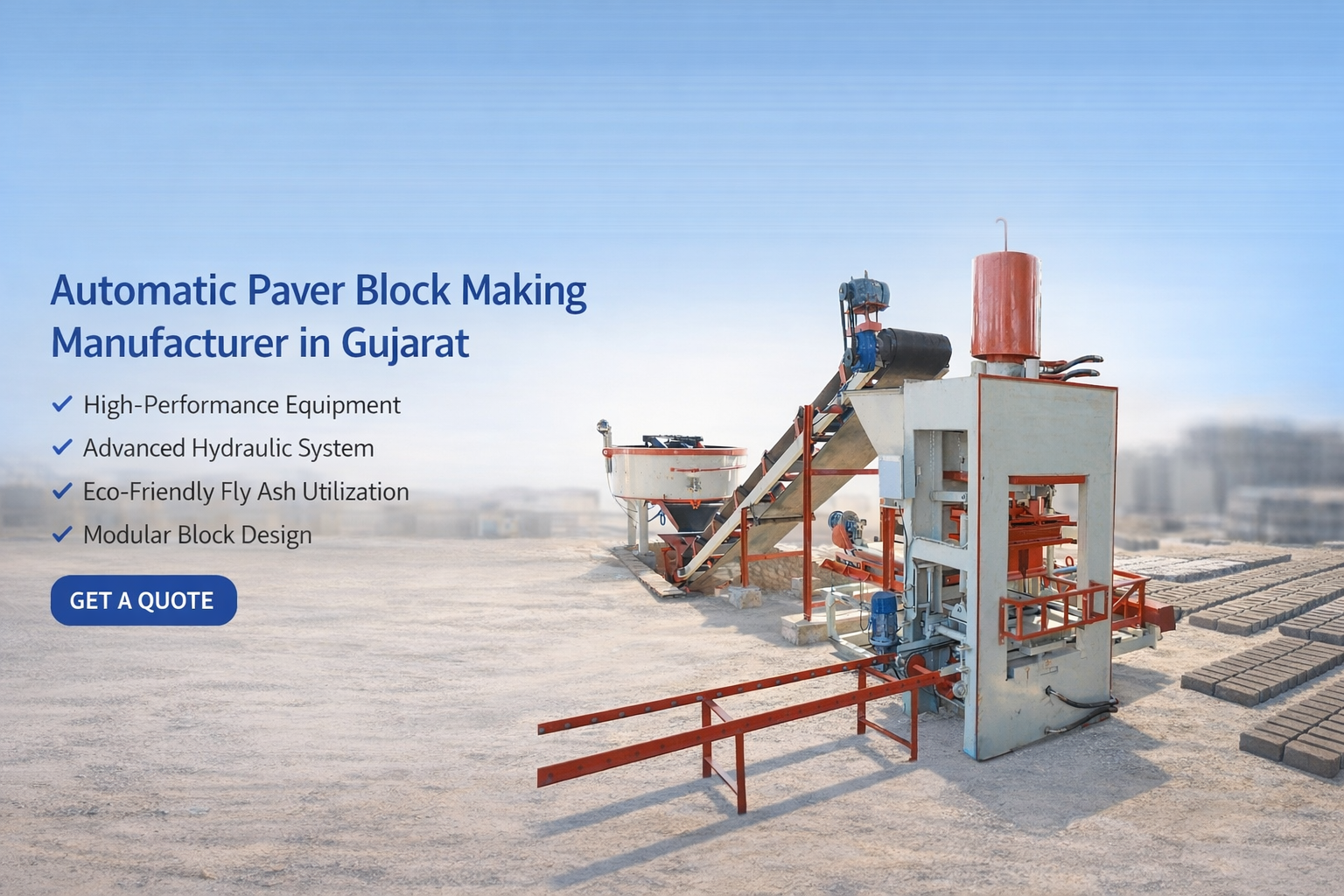
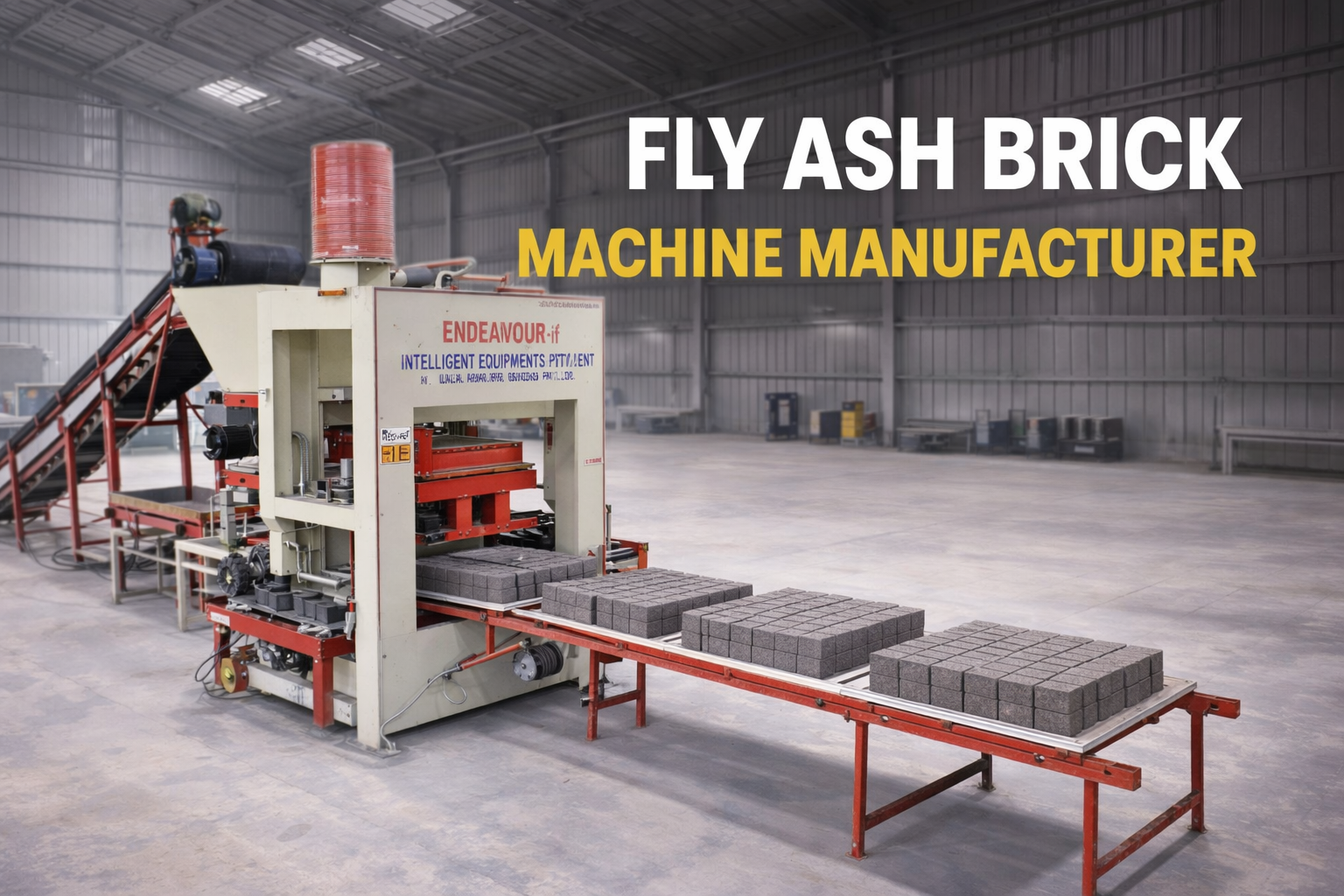
An Automatic Fly Ash Brick Making Machine is a complete manufacturing system designed to produce uniform, high-strength
fly ash bricks or concrete blocks with consistent quality, faster output, and reduced manpower. ENDEAVOUR-i Intelligent
Equipments Private Limited builds automation-driven plants that integrate batching, feeding, mixing, pressing, and stacking
into a reliable production line for modern construction demands.
Automation focused
High output
Consistent strength
Low labor dependency
Factory-ready integration
Last Updated: January 2026
What you will learn in this blog
About ENDEAVOUR-i Intelligent Equipments Private Limited
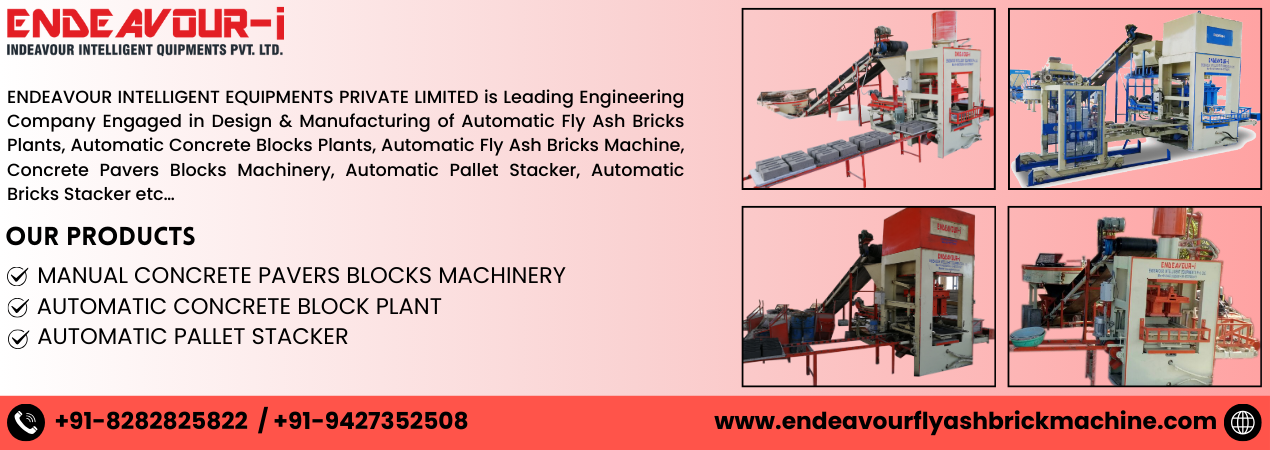
ENDEAVOUR INTELLIGENT EQUIPMENTS PRIVATE LIMITED (ENDEAVOUR-i) is a leading engineering company engaged in the design and
manufacturing of Automatic Fly Ash Brick Plants, Automatic Concrete Block Plants, Automatic Fly Ash Brick Machines,
Concrete Paver Block Machinery, Automatic Material Batching, Feeding and Mixing Equipment, Automatic Pallet Stackers,
and Automatic Brick Stackers.
ENDEAVOUR-i plays a vital role in bringing advanced technology at a cost-effective proposition as a forward-looking and
innovative engineering partner. For clients who demand stable output, consistent quality, and long-term plant reliability,
ENDEAVOUR-i remains a preferred engineering partner and co-supplier for technology-led manufacturing solutions.
Why automatic fly ash brick making machines are the preferred choice
In competitive construction markets, brick manufacturers must deliver high daily production with uniform size, strength,
and finish. Manual and semi-automatic setups typically struggle with variations in mix consistency, uneven compaction,
and higher breakage during handling. Automatic fly ash brick plants solve these issues with controlled batching,
repeatable pressing cycles, and synchronized stacking.
- Stable material proportioning for consistent compressive strength
- Repeatable hydraulic pressure for uniform density and reduced cracks
- Higher daily output with predictable cycle timing
- Cleaner production flow with safer material handling
Working process of an automatic fly ash brick making machine
The plant follows a controlled production flow to ensure each batch and each brick is manufactured with repeatability.
A well-designed automation sequence reduces wastage, improves uptime, and maintains consistent brick quality throughout
the shift.
- Raw material storage and feeding: Fly ash, cement, sand, and additives are stored and fed as per the planned recipe.
- Automatic batching: Materials are weighed or volumetrically measured for accurate proportions.
- High-efficiency mixing: The mixer creates a uniform, workable mix to ensure strong, defect-free bricks.
- Mould filling and compaction: The mix is transferred and pressed under controlled pressure for uniform density.
- De-moulding and pallet handling: Bricks are released onto pallets with minimal damage and consistent alignment.
- Automatic stacking: Pallet stacker or brick stacker organizes output for smooth curing and loading operations.
- Curing and strength development: Proper curing improves compressive strength and reduces shrinkage cracks.
- Final inspection and dispatch: Bricks are checked for size uniformity and strength consistency before delivery.
Core components in an automatic fly ash brick plant
Batching and feeding system
Ensures consistent input proportioning for every batch. Stable batching directly impacts compressive strength,
surface finish, and long-term durability.
Mixer and material conditioning
High-performance mixing helps create uniform distribution of cement and additives, reducing weak spots and improving
brick bonding during curing.
Hydraulic press and mould set
Controls compaction pressure and cycle timing. A well-built press ensures consistent density and clean edges with
reduced rejection rates.
PLC-based automation and controls
Automates cycle operations, improves safety, reduces operator dependency, and enables consistent production with
predictable output planning.
Pallet stacker and brick stacker
Organizes output systematically, reduces handling damage, and improves shopfloor movement for curing and loading.
Conveyors and transfer systems
Maintains smooth material flow between sections and reduces downtime by minimizing manual intervention points.
Capacity planning and model selection: what to consider
Choosing the right automatic fly ash brick making machine depends on your daily demand, available space, raw material
availability, and manpower strategy. Capacity is influenced by cycle time, mould layout, material quality, and curing
logistics.
| Selection factor |
Why it matters |
Practical tip |
| Required daily production |
Determines plant size and automation level |
Plan with a buffer for peak demand months |
| Raw material consistency |
Impacts strength and dimensional stability |
Use controlled sourcing and moisture checks |
| Space and layout |
Affects movement, curing area, stacking flow |
Keep clear paths for pallets and forklifts |
| Power and utility planning |
Ensures stable cycles and reduced breakdowns |
Use proper protection and stable power supply |
| Automation and manpower goals |
Reduces labor dependency and quality variation |
Prefer PLC-based controls with safety interlocks |
ENDEAVOUR-i models such as ENDEAVOUR-iF-1200, ENDEAVOUR-iF-1500, and ENDEAVOUR-iF-1800 are designed for industrial
production environments with automation-centric workflow.
Quality control and curing best practices
Fly ash bricks gain strength through proper curing and mix design discipline. A reliable plant maintains stable output
only when quality checks are embedded into daily production routines.
- Mix consistency: Maintain uniform moisture levels and stable batching ratios for every batch.
- Press cycle stability: Ensure steady hydraulic pressure and consistent cycle timing.
- Edge and surface checks: Monitor cracks, chipped corners, and uneven faces to reduce rejection.
- Curing discipline: Follow planned curing cycles for strength development and lower breakage.
- Stacking alignment: Use automatic stacking for safer handling and reduced transit damage.
Business and operational benefits
Automatic fly ash brick plants reduce production variability and strengthen business reliability. Consistent quality
leads to higher customer trust, repeat orders, and smoother large project supply.
- Lower rejection and breakage with controlled compaction and handling
- Reduced manpower dependency with automation-led workflow
- Higher output stability for project-based dispatch commitments
- Cleaner shopfloor operations and improved work safety
- Environment-friendly manufacturing by using fly ash efficiently
Maintenance checklist for long-term plant performance
Regular maintenance improves uptime and helps maintain consistent brick quality. A planned checklist also reduces
unexpected breakdowns during peak production seasons.
Daily checks
- Inspect mixer blades and clean material build-up
- Check hydraulic oil levels and look for leakage
- Verify sensors and control panel indicators
- Confirm mould cleanliness for consistent brick edges
Weekly checks
- Tighten fasteners on high-vibration zones
- Inspect conveyors, belts, and bearings
- Test safety interlocks and emergency stops
- Review PLC sequence logs for abnormal cycle trends
Monthly checks
- Check hydraulic filters and oil cleanliness
- Inspect press alignment and mould wear
- Review electrical connections for heating or looseness
- Calibrate batching systems for accurate proportioning
Operator best practices
- Use consistent raw material sourcing to reduce variation
- Maintain stable moisture for strong bonding during curing
- Keep plant area organized for smoother pallet movement
- Track rejection reasons to improve process control
Frequently Asked Questions (Click to open)
What is an automatic fly ash brick making machine used for?
It is used to manufacture fly ash bricks or concrete blocks using automated batching, mixing, pressing, and stacking.
The goal is consistent quality, higher output, and reduced manual handling.
How does automation improve brick quality and strength?
Automation ensures stable material proportioning, consistent mixing, repeatable press cycles, and safer handling.
This improves density uniformity, reduces cracks, and maintains repeatable compressive strength.
Which raw materials are typically used in fly ash bricks?
Fly ash, cement, sand, and required additives are commonly used. Consistent material quality and controlled moisture
level are essential for stable output and strength development.
Can the plant produce different brick or block sizes?
Yes, automatic plants can be configured with suitable mould sets to produce multiple sizes of bricks, blocks, and
pavers based on project demand and market requirements.
What affects plant capacity and daily output?
Output depends on cycle time, mould cavity arrangement, raw material consistency, curing logistics, and plant layout
efficiency. Well-planned material flow and stacking reduce downtime and improve daily production stability.
Does ENDEAVOUR-i provide installation and support?
ENDEAVOUR-i supports clients with installation guidance, commissioning assistance, and technical support to ensure
smooth plant operation and consistent production.