Get Your Free Quote…!


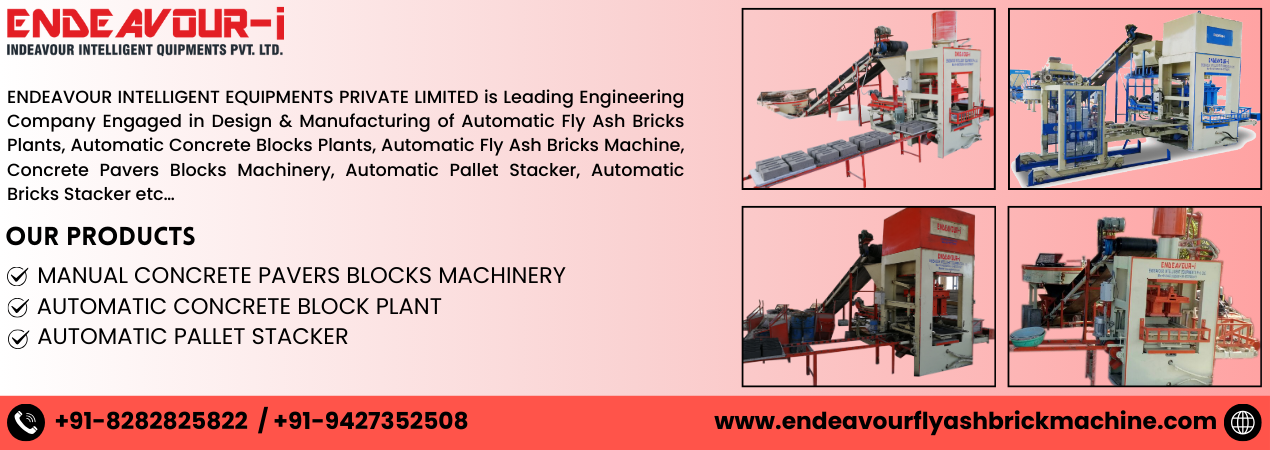
For construction material manufacturers, selecting the right production plant is a strategic decision that directly impacts product quality, production cost, scalability, and long-term profitability. Two commonly compared systems are the fly ash brick plant and the concrete block plant. While both are used in the construction sector, they differ significantly in raw material usage, production flexibility, and application suitability.
Understanding these differences helps manufacturers align their investment with market demand, regulatory requirements, and future expansion plans.
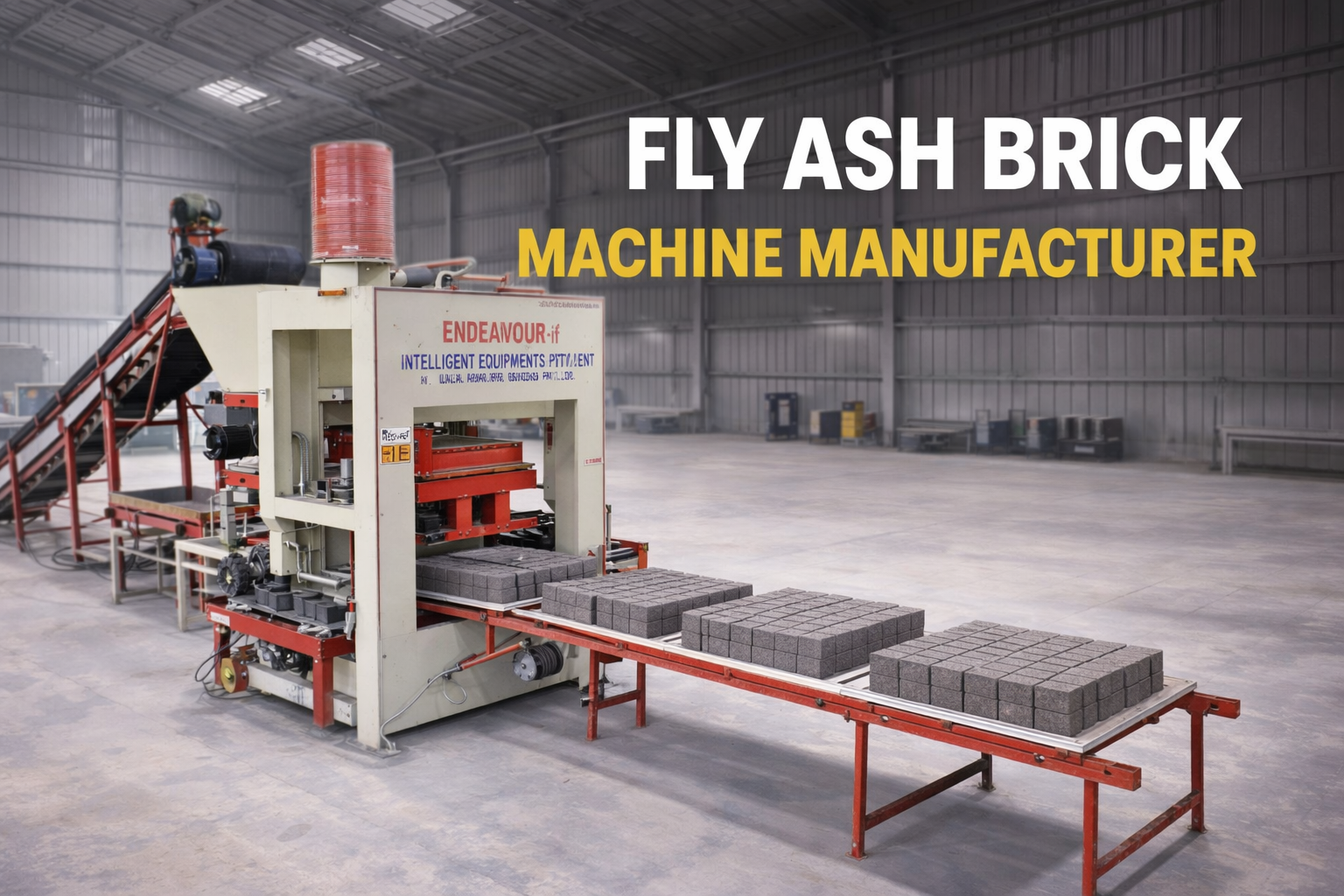
A fly ash brick plant is designed to manufacture bricks using fly ash, which is a by-product generated from coal-based thermal power plants. Fly ash is mixed with cement, sand, and water to produce bricks through vibration or compression methods. The plant layout focuses on accurate batching, uniform mixing, and controlled curing.
Fly ash bricks are widely used due to their smooth surface finish, uniform dimensions, and better workability compared to traditional clay bricks. These plants are particularly suitable in regions where fly ash availability is consistent and government policies encourage sustainable construction practices.
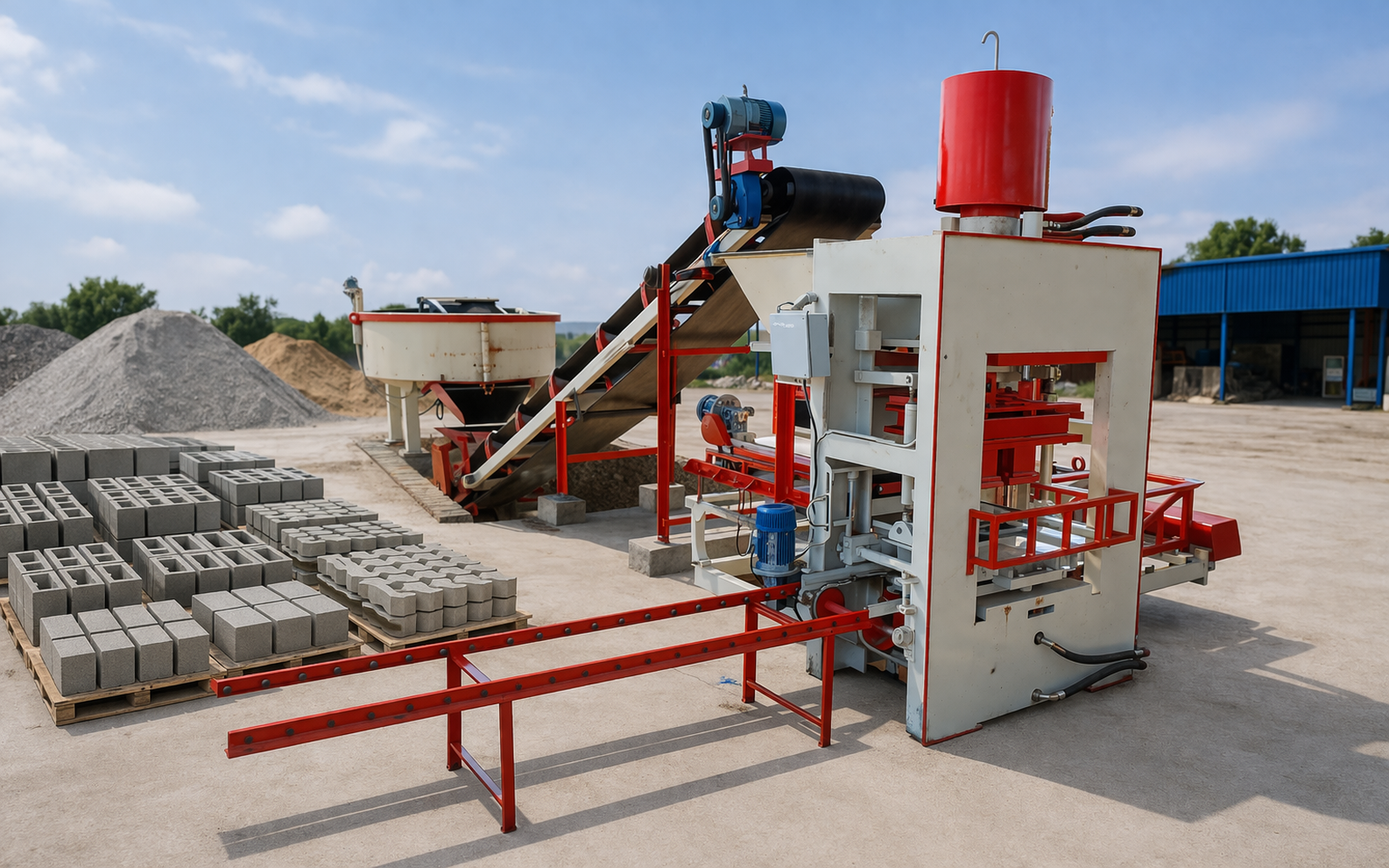
A concrete block plant is engineered to manufacture solid blocks, hollow blocks, and paver blocks using cement, aggregates, and sand. Unlike fly ash brick plants, concrete block plants offer greater flexibility in product variation by changing molds and production parameters.
Concrete blocks are commonly used in load-bearing walls, boundary walls, industrial structures, and infrastructure projects. Automatic concrete block plants are preferred for high-volume production where dimensional accuracy and structural strength are critical.
Uses fly ash as the primary raw material, making it suitable for eco-conscious manufacturing and standardized brick production.
Uses cement and aggregates, allowing production of multiple block types including hollow and paver blocks.
Primarily produces uniform brick shapes with limited dimensional variation.
Supports flexible product sizes and shapes through mold replacement.
Ideal for masonry walls and non-load bearing construction.
Suitable for structural and non-structural construction applications.
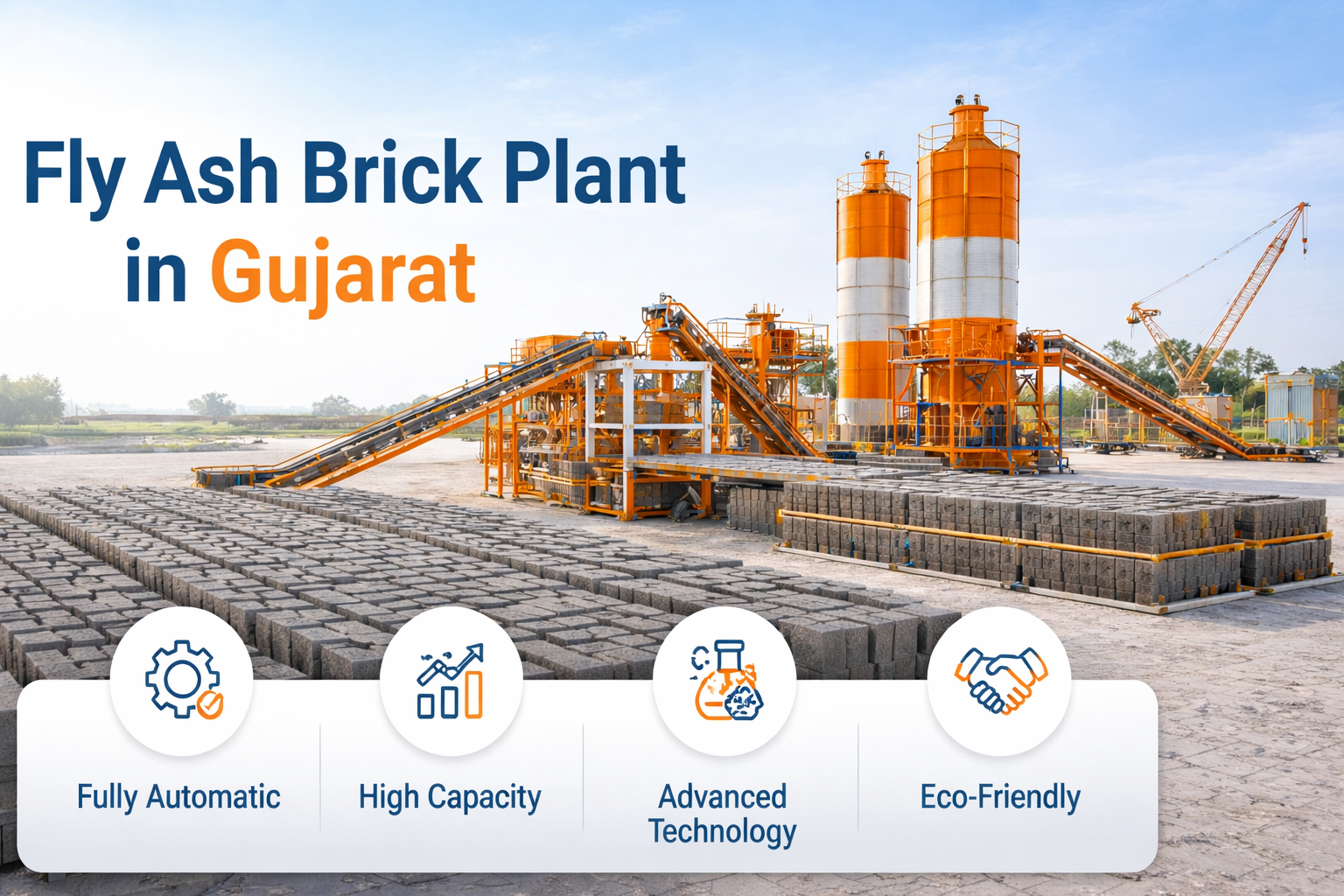
Both fly ash brick plants and concrete block plants are available in semi-automatic and fully automatic configurations. Automatic systems integrate batching, mixing, compaction, and stacking operations to reduce manual intervention and ensure stable production cycles.
Concrete block plants generally offer higher daily production capacity due to faster cycle times and broader product range, whereas fly ash brick plants emphasize uniform output and material utilization efficiency.
Fly ash brick plants are suitable for manufacturers targeting standardized brick supply in residential and commercial construction. Concrete block plants are better aligned with diversified markets where blocks, pavers, and structural units are in demand.
Evaluating local construction trends, raw material availability, and logistics cost is essential before selecting the appropriate plant configuration.
Fly ash brick plants generally have simpler product variation requirements, making them easier to manage for first-time manufacturers.
Concrete block plants offer higher scalability due to their flexibility in product types and capacity expansion options.
🏢 ENDEAVOUR INTELLIGENT EQUIPMENTS PRIVATE LIMITED
Automatic Fly Ash Brick Plants & Concrete Block Plants Manufacturer
🌐 https://endeavourflyashbrickmachine.com/
📩 Visit official website for inquiries and technical consultation
Filter Using Product Tags